Technical Q&A on HICLOVER Waste Incinerators: Industrial Efficiency and Regulatory Compliance
The modern industrial landscape demands robust and efficient solutions for waste management. In the realm of industrial thermal destruction, **waste incinerators** play a pivotal role. The HICLOVER waste incinerator offers an innovative and reliable approach, designed to meet strict engineering reliability criteria and industrial standards with a temperature range that satisfies **medical incinerator operating temperature standards**. Within this context, the system is crafted to align with evolving regulatory frameworks (such as WHO and EU emission standards) and techno-economic considerations. Moreover, it addresses market niches including **Sao Tome and Principe small waste incinerator**, **Lesotho large incinerator**, **Botswana garden incinerator**, **advanced hospital waste incinerator system**, and **incineration in china**. This document provides an in-depth Q&A session that addresses performance, technical regulations, and economic benefits while highlighting factory direct supply, PLC automation, and containerized modular design.
Q1: What distinguishes the HICLOVER waste incinerator’s technical performance in modern waste management?
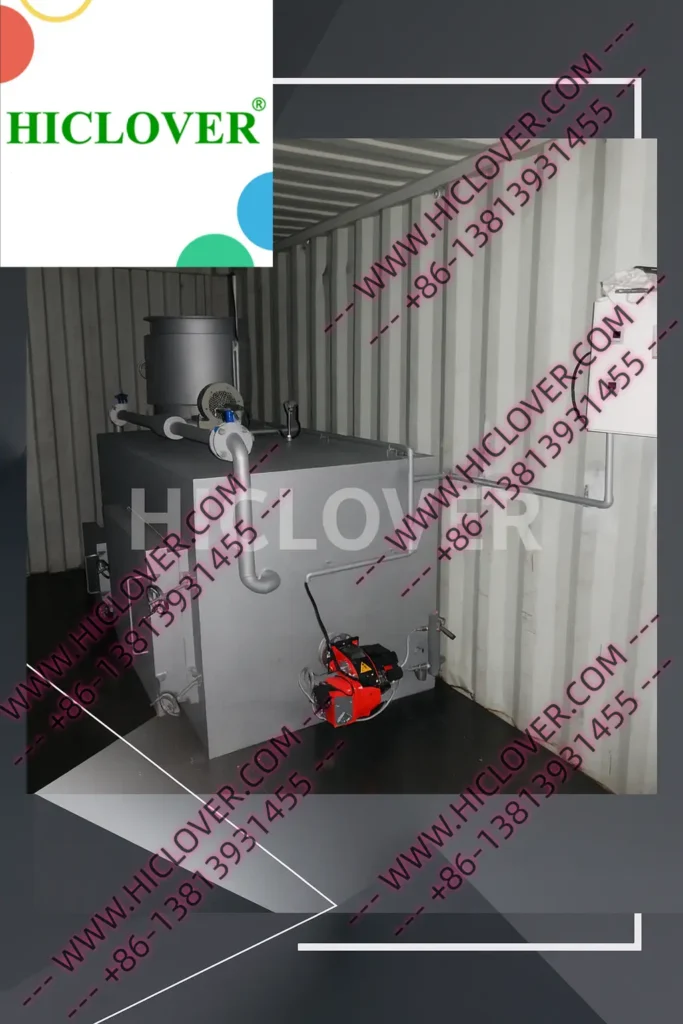
The HICLOVER waste incinerator stands out due to its advanced engineering design and production excellence. The system employs dual combustion chambers to achieve a comprehensive breakdown of waste materials. This dual chamber architecture is essential for ensuring complete combustion, high temperature retention, and adherence to **medical incinerator operating temperature standards**. The advanced design offers a significant advantage when contrasting fixed installations with containerized modular systems. Factories that manufacture these systems have extensive engineering experience backed by a stable supply chain. This capability ensures consistent production quality, and the adoption of PLC automation over manual control enables precise combustion management even in remote or mobile operations.
A major technical feature of the HICLOVER design is its capacity to accommodate variable fuel types. The multi-fuel operation supports diesel, LPG, and natural gas, making it adaptable for diverse sites ranging from **Botswana garden incinerator** requirements to **advanced hospital waste incinerator system** provisions in areas with stringent health-related regulations. The integration of either dry scrubbers or wet scrubbers further refines the emissions control process, which directly relates to carbon emission reduction pressure and ESG compliance. Additionally, technical temperature standards are maintained by ensuring consistent thermal retention, which is pivotal to reducing harmful emissions. In many respects, the incinerator’s dual chamber explanation clarifies how primary and secondary combustion areas work synergistically, thereby increasing the overall combustion efficiency and minimizing waste residues. In light of these features, the HICLOVER waste incinerator ensures robust performance in various operating conditions including crisis zones & humanitarian camps, where rapid and reliable waste destruction is paramount.
In quantitative terms, the system’s reliability stems from its intricate engineering, verified by adherence to digital automation in industrial equipment trends. The reliability is further underpinned by the rigorous adoption of technical specifications aligned with global infectious disease preparedness, ensuring that the equipment can be deployed in epidemic crisis areas with minimal operational disruptions. This integration of harsh environment operations with precision energy recovery systems highlights the product’s suitability not only for routine applications in urban settings but also for remote mining or oil camps, where supply chain resilience is critical. The technical innovations found in the HICLOVER platform have been widely accepted among regulatory bodies seeking efficient incineration solutions worldwide.
Q2: How do regulatory and technical standards influence the performance and market integration of the HICLOVER waste incinerator?
Regulatory compliance is a cornerstone of the HICLOVER incinerator’s design philosophy. The system is engineered in accordance with international standards, such as the emission frameworks imposed by the EU and guidance from the WHO. These standards include specific technical temperature thresholds, combustion principles based on dual-chamber operational theory, and rigorous post-combustion emission treatment. Compliance with such standards is crucial for facilities designated as **advanced hospital waste incinerator system** users, ensuring that the incinerator meets the highest industrial safety and environmental requirements.
The precision engineering of the HICLOVER waste incinerator extends into its operational control methodologies. For instance, the choice between a PLC-based (programmable logic controller) automation and traditional manual control systems is evaluated through comparative studies on efficiency and ROI. Digital automation ensures faster response times in emergency scenarios, thereby supporting global infectious disease preparedness efforts. With this level of automation, operators can monitor temperature ranges and combustion status in real time, significantly reducing the risk of compliance failures. For an in-depth technical comparison, more detailed analyses can be found at HICLOVER’s official website.
From a regulatory perspective, engineering reliability is further established by incorporating design features such as containerized modular systems and remote site suitability. This adaptability fulfills the requirements for markets such as **Sao Tome and Principe small waste incinerator** installations and **Lesotho large incinerator** applications where geographical and infrastructural challenges prevail. The regulation-oriented design also benefits from advanced computational modeling of combustion dynamics and validates performance through rigorous laboratory tests, including tests aligned with the criteria found in medical+incinerator+secondary+chamber+temperature+standard research.
Furthermore, the robust engineering behind these incinerators guarantees that the emission control system—whether using dry scrubber or optional wet scrubber technology—is both effective and economically viable. These technologies minimize pollutants while ensuring maximum energy recovery, bolstering the incinerator’s overall economic and environmental benefits. Compliance with evolving environmental standards is not only a regulatory imperative but also a market-driven demand, particularly in regions impacted by crisis zones & humanitarian camps and energy management challenges.
Q3: What are the cost-effectiveness, ROI, and economic benefits associated with the HICLOVER waste incinerator systems?
The cost-effectiveness of HICLOVER waste incinerators is a key component of their market appeal. A detailed comparison of incinerator types—ranging from fixed installations to containerized systems—reveals that HICLOVER’s design maximizes ROI through operational efficiency and minimal maintenance requirements. The system’s engineering experience, rooted in factory manufacturing capability, ensures that each unit delivers consistent performance while decreasing lifecycle costs. For government officials and regulatory bodies, this implies not just a reduction in operational expenditure but also an improvement in compliance with rigorous environmental and safety standards.
From an economic standpoint, HICLOVER waste incinerators demonstrate advantages in the areas of scalability and adaptability. For example, installations such as the **Lesotho large incinerator** and **Botswana garden incinerator** types can be customized to suit local waste profiles and volume requirements. The modular design, particularly the mobile plug-and-play systems, supports remote or decentralized waste management operations, which are increasingly sought after in crisis zones & humanitarian camps. The ability to adjust chamber volumes and integrate optional wet or dry scrubbers enhances the overall economic feasibility by reducing energy consumption and improving incineration